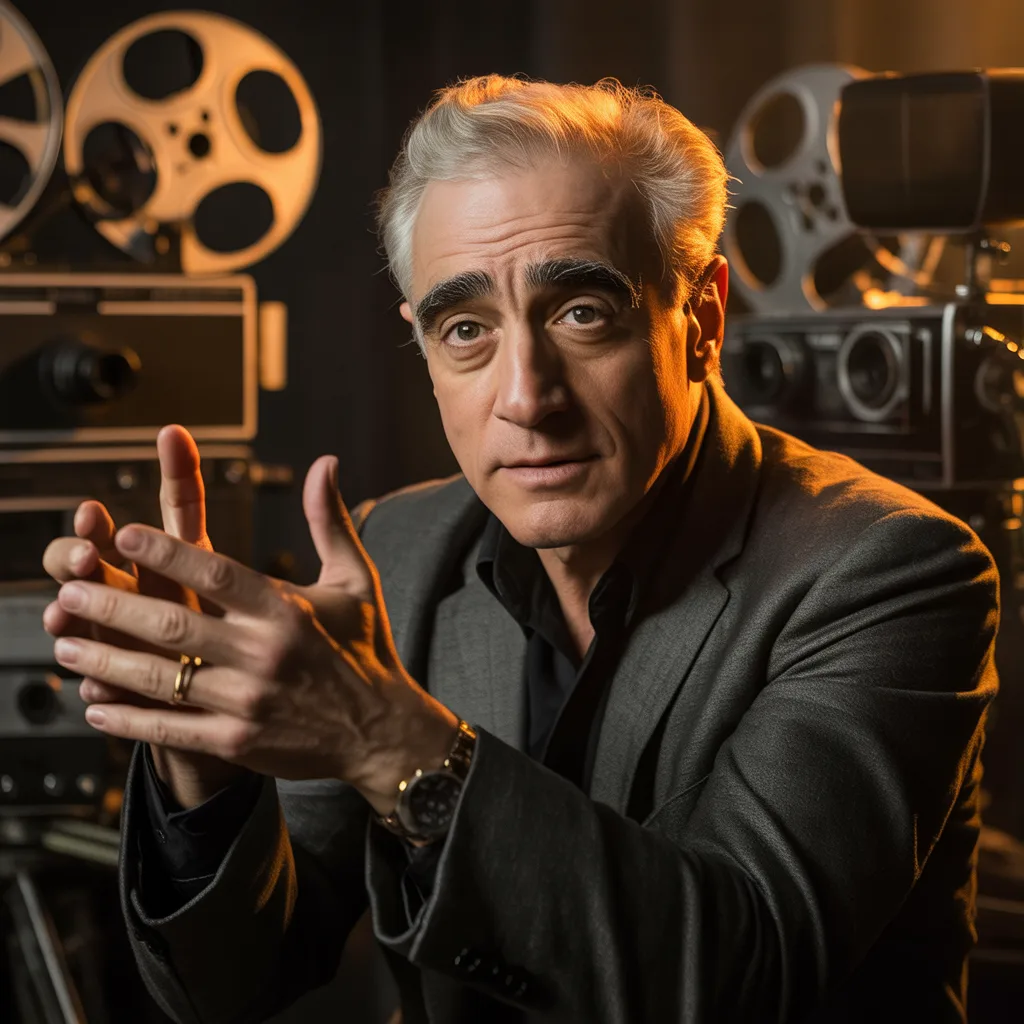
Martin Scorsese: The Brilliant & Brutal Master of Cinema
Have you ever watched a film and felt like the director truly understood something raw and honest about being human? That feeling is what Martin Scorsese has been delivering for over five decades. Whether it is the violent streets of New York or the glittering excess of Las Vegas, Scorsese has a way of pulling you into a world so vivid it almost feels real.
Martin Scorsese is widely regarded as one of the greatest directors in cinema history. His work spans crime dramas, religious epics, documentaries, and sweeping historical films. If you have ever seen Goodfellas, Taxi Driver, or The Departed, you already know what it feels like to be inside a Scorsese film. In this article, you will get a complete look at who he is, where he came from, how his style evolved, and why his films continue to matter so much.
Early Life: Growing Up in Little Italy
Martin Scorsese was born on November 17, 1942, in Queens, New York. He grew up in the Little Italy neighborhood of Manhattan. This was a tight-knit, working-class Italian-American community, and it shaped almost everything about how he sees the world.
As a child, Scorsese suffered from severe asthma. He could not play sports or spend much time outside like other kids. So he spent his time inside, watching films with his father at local movie theaters. That early immersion in cinema planted a seed that would grow into one of the most celebrated careers in film history.
His parents, Charles and Catherine Scorsese, were both children of Sicilian immigrants. They later appeared in several of his films. Growing up Catholic also had a deep effect on him. Themes of sin, guilt, redemption, and moral conflict run through nearly every film he has ever made.
Film School and the Birth of a Filmmaker
Scorsese studied at New York University’s Tisch School of the Arts. He earned his bachelor’s degree in film communications in 1964 and his master’s degree in 1966. NYU was the right environment for him. It connected him with other young filmmakers and gave him the technical foundation he needed.
His early short films already showed a raw, restless energy. He was absorbing influences from Italian neorealism, the French New Wave, and classic Hollywood cinema all at once. He was not trying to copy anyone. He was trying to synthesize everything he had ever loved about film into something new.
His early feature, “Who’s That Knocking at My Door” (1967), introduced many of the themes he would return to again and again: masculinity, guilt, faith, and the conflict between street life and spiritual longing.
The Breakthrough: Mean Streets and Taxi Driver
Mean Streets (1973)
If you want to understand Martin Scorsese, start with “Mean Streets.” It was his first truly personal film. Set in Little Italy, it follows a group of small-time criminals trying to navigate loyalty, religion, and survival. Robert De Niro appeared here for the first time in a Scorsese film. Their creative partnership would become one of the most productive in cinema history.
“Mean Streets” was not a blockbuster. But it got serious critical attention. It announced to the world that a major new filmmaker had arrived.
Taxi Driver (1976)
“Taxi Driver” is arguably the film that made Scorsese a household name among serious film lovers. Robert De Niro plays Travis Bickle, a disturbed Vietnam veteran working as a night-shift cab driver in a city he sees as morally broken. The film is uncomfortable to watch. It is supposed to be.
“Taxi Driver” grossed over 28 million dollars on a budget of just 1.3 million. It won the Palme d’Or at the Cannes Film Festival. It was a cultural moment. It captured a specific American anxiety in the post-Vietnam, post-Watergate era that no other film had managed to bottle so precisely.
Defining the Crime Genre: Goodfellas and Casino
Goodfellas (1990)
If there is one film that defines Martin Scorsese’s reputation as a master of crime cinema, it is “Goodfellas.” Based on the true story of Henry Hill, a mob associate who eventually became an FBI informant, the film is a three-hour rush of energy, violence, dark humor, and moral decay.
The famous “long take” tracking shot through the Copacabana nightclub is one of the most studied sequences in cinema history. Scorsese used it to make you feel what Henry felt: power, status, and the seductive pull of the criminal world. Then, over the next two hours, he shows you exactly what that world costs.
“Goodfellas” was nominated for six Academy Awards. Ray Liotta, Robert De Niro, and Joe Pesci all delivered career-defining performances. Roger Ebert gave it a perfect four-star review and called it a “great film.”
Casino (1995)
“Casino” is often seen as the darker, more exhausted cousin of “Goodfellas.” Where “Goodfellas” has a kinetic, almost celebratory energy, “Casino” is about the slow collapse of everything. Set in 1970s Las Vegas, it follows Sam Rothstein (De Niro), a mob-connected casino boss whose world crumbles because of ego, greed, and a self-destructive relationship.
Sharon Stone earned an Academy Award nomination for her role as Ginger. The film is overlong by design. Scorsese wants you to feel the excess.
Collaboration and the DeNiro-DiCaprio Axis
One of the most fascinating things about studying Martin Scorsese is how he works with actors. He does not just direct performers. He builds long-term creative relationships with them.
His work with Robert De Niro produced some of the most memorable performances in American cinema: “Mean Streets,” “Taxi Driver,” “Raging Bull,” “Goodfellas,” “Cape Fear,” and “Casino.” That is six major films across two decades.
Then came Leonardo DiCaprio. Starting with “Gangs of New York” in 2002, Scorsese and DiCaprio developed an equally powerful partnership. “The Aviator,” “The Departed,” “Shutter Island,” “The Wolf of Wall Street,” and “Killers of the Flower Moon” followed. DiCaprio has said that working with Scorsese pushed him further than any other director.
What makes these collaborations work? Scorsese creates an environment of trust. He lets actors bring themselves to a role. He does not want perfect line readings. He wants truth.
Raging Bull: The Film Many Call His Masterpiece
Released in 1980, “Raging Bull” is a black-and-white biographical film about boxer Jake LaMotta. Robert De Niro gained 60 pounds for the role. The film was shot in black and white deliberately, to give it a timeless, almost mythic quality.
“Raging Bull” was not a commercial success on release. Critics were divided. But over time, it has been recognized as one of the greatest American films ever made. The American Film Institute ranked it the fourth greatest American film in its 2007 list. The boxing sequences are some of the most viscerally effective action filmmaking ever put on screen.
The film is really not about boxing. It is about self-destruction. It is about a man who cannot stop punishing himself and everyone around him. Scorsese has said it is the most personal film he has ever made.
The Departed and Finally Winning the Oscar
For a long time, Martin Scorsese was the most famous director in Hollywood who had never won an Academy Award for Best Director. He had been nominated five times. He lost for “Raging Bull,” “Goodfellas,” “Gangs of New York,” and “The Aviator.” The film industry seemed to think his work was too raw, too violent, too morally ambiguous.
Then came “The Departed” in 2006. A remake of the Hong Kong thriller “Infernal Affairs,” the film follows parallel undercover operations: a cop inside the mob and a mobster inside the police force. Jack Nicholson, Matt Damon, Leonardo DiCaprio, Mark Wahlberg, and Alec Baldwin all delivered extraordinary performances.
“The Departed” won four Academy Awards, including Best Picture and Best Director. When he finally accepted the Oscar, the standing ovation in the room said everything. Hollywood had waited a long time to honor him properly.
Beyond Crime: Religion, History, and Documentary Work
One of the less-discussed but equally important parts of Martin Scorsese’s career is the range of subjects he has tackled outside crime drama.
“The Last Temptation of Christ” (1988) was a deeply controversial film about the human side of Jesus. It provoked protests and boycotts before it even opened. Scorsese has said it is one of the most spiritually sincere projects of his career.
“Kundun” (1997) told the story of the Dalai Lama’s early life and Tibet’s conflict with China. It was a quiet, meditative film that looked nothing like his other work.
“Hugo” (2011) was a family adventure film and a love letter to the origins of cinema. It won five Academy Awards and showed a gentler, more playful side of his filmmaking.
His documentary work is also remarkable. He has made films about Bob Dylan, George Harrison, the Rolling Stones, and the history of Italian cinema. He co-founded the World Cinema Foundation to preserve endangered films from around the world.
Killers of the Flower Moon: A Late-Career Triumph
In 2023, Scorsese released “Killers of the Flower Moon,” a three-and-a-half-hour epic about the Osage Nation murders in 1920s Oklahoma. The film stars Leonardo DiCaprio and Robert De Niro, reuniting Scorsese with both of his great acting collaborators at once.
The film was praised as one of his best works. It is a film about systematic evil, about how greed and racism can operate behind the mask of ordinary life. Scorsese was 80 years old when the film came out. The fact that he was still making ambitious, demanding, morally serious cinema at that age is remarkable.
“Killers of the Flower Moon” was nominated for ten Academy Awards. It earned over 156 million dollars worldwide. It confirmed that Scorsese has no interest in slowing down.
What Makes Scorsese’s Style Unique
If you have seen several of his films, you start to notice patterns. These are not accidents. They are the building blocks of a personal cinematic language.
Here are the signature elements of Scorsese’s filmmaking style:
- Voice-over narration. Characters often narrate their own stories directly to the audience. It creates intimacy and irony at the same time.
- Freeze frames. He uses sudden freeze frames to punctuate moments, often at turning points in a character’s life.
- Music as commentary. His use of popular music is legendary. A Rolling Stones song or a classic rock track will often play over a scene of violence or excess, creating a jarring, powerful contrast.
- Long takes and tracking shots. He uses extended unbroken shots to build tension and immerse you in a world.
- Moral ambiguity. His characters are rarely simply good or bad. They are people making terrible choices for understandable reasons.
- Religion and guilt. Almost every Scorsese film wrestles with Catholic themes of sin, forgiveness, and moral failure.
Scorsese’s Impact on Cinema and Filmmakers
Ask any serious filmmaker today about their influences and Martin Scorsese’s name comes up constantly. Paul Thomas Anderson, David Fincher, Quentin Tarantino, Bong Joon-ho, and dozens of others have cited him directly.
He changed what was possible for American cinema. Before films like “Mean Streets” and “Taxi Driver,” Hollywood was still largely in the grip of old studio conventions. Scorsese, along with peers like Francis Ford Coppola, Brian De Palma, and Steven Spielberg, helped tear those conventions down. They made personal, risky, adult films that treated audiences as intelligent people.
He also helped define what we now call “prestige television.” He served as an executive producer on “Boardwalk Empire” and directed the pilot episode. His influence on shows like “The Sopranos” and “Succession” is evident, even when he was not directly involved.
Conclusion
Martin Scorsese is not just a filmmaker. He is a living argument for why cinema matters. His films ask difficult questions about violence, guilt, identity, faith, and the American dream. They are not always comfortable to watch. That is the point.
Over a career spanning more than 50 years, he has consistently challenged himself and his audiences. He has never made the same film twice. He has never settled for safe or easy. Even at 80, he is still making some of the most ambitious films of his career.
If you have never seen a Scorsese film, start with “Goodfellas.” If you have already seen it, go back and watch it again. You will notice something new. That is the mark of a truly great filmmaker: the work keeps giving.
What is your favorite Martin Scorsese film, and do you think he still has more masterpieces ahead of him?
Frequently Asked Questions
1. How many films has Martin Scorsese directed? Scorsese has directed over 25 feature films, along with numerous documentaries, short films, and television episodes spanning more than five decades.
2. Has Martin Scorsese won an Academy Award? Yes. He won his first Best Director Oscar for “The Departed” in 2007, after being nominated five previous times.
3. What is Martin Scorsese’s best film? Critics and filmmakers most often cite “Goodfellas,” “Raging Bull,” or “Taxi Driver” as his greatest works, though “Killers of the Flower Moon” has recently earned similar praise.
4. Why is Martin Scorsese so influential? He helped redefine American cinema in the 1970s by making personal, morally complex films that broke from old Hollywood conventions. His style, themes, and techniques have influenced generations of filmmakers.
5. What themes does Martin Scorsese return to most often? Guilt, redemption, masculinity, violence, organized crime, religion, and the darker sides of the American dream appear repeatedly across his career.
6. What is the relationship between Scorsese and Leonardo DiCaprio? They have made six films together, starting with “Gangs of New York” in 2002. DiCaprio has called Scorsese the most important director in his career.
7. Did Martin Scorsese grow up in a criminal environment? He grew up in Little Italy, Manhattan, and was surrounded by the culture and characters he would later depict in his films. He was not a criminal, but he knew the world intimately.
8. What did Scorsese say about Marvel movies? In 2019, Scorsese said Marvel films are not cinema in the traditional sense, comparing them to theme parks. His comments sparked a major debate about the nature of commercial versus artistic filmmaking.
9. Is Martin Scorsese still making films? Yes. He completed “Killers of the Flower Moon” in 2023 at age 80 and has reportedly been developing a film about the life of Jesus Christ as a future project.
10. What makes Scorsese’s use of music so distinctive? He selects popular music that creates ironic or emotional contrast with on-screen events. Rather than using a traditional score to tell you how to feel, his music choices often challenge or complicate your reaction to a scene.
