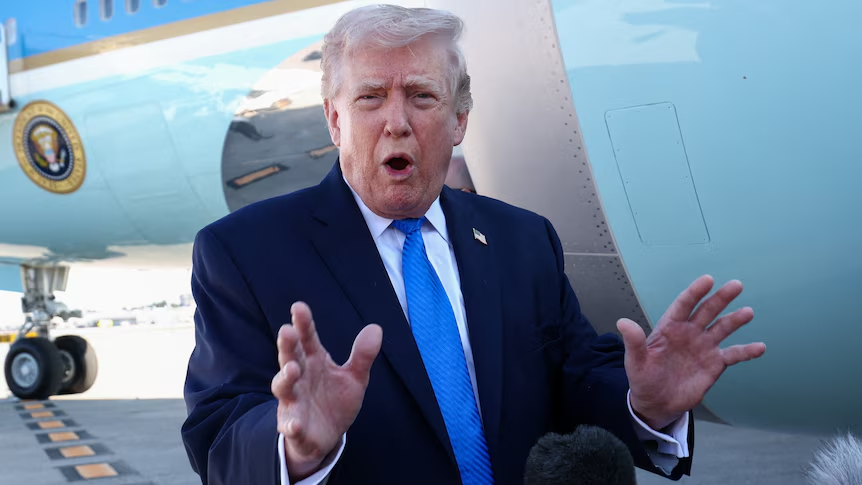
Donald Trump: The Powerful Rise That Shook American Politics
Few names in modern history spark as much strong reaction as Donald Trump. You might admire him. You might strongly oppose him. But one thing is almost impossible to do — ignore him. Whether you follow politics closely or just catch the occasional headline, Donald Trump has a way of dominating the conversation like no other figure in recent American life.
So who exactly is this man? How did a real estate developer from Queens, New York, become one of the most consequential political figures of the 21st century? And what does his record — across two presidencies — actually tell us about the direction of America?
This article walks you through the full picture. We’ll cover Trump’s early life, his business career, his path to the presidency, his first and second terms, the controversies that have followed him, and where things stand today. Whether you’re looking for context, clarity, or just a well-rounded overview, you’ll find it here.
From Queens to the Boardroom: Donald Trump’s Early Life
Donald John Trump was born on June 14, 1946, at Jamaica Hospital in New York City’s borough of Queens, the fourth child of Fred Trump and Mary Anne MacLeod Trump. Wikipedia He grew up in a comfortable, wealthy household in Jamaica Estates — not exactly the working-class background that some of his political supporters might imagine.
He graduated from the University of Pennsylvania in 1968 with a bachelor’s degree in economics. Wikipedia After college, the path forward seemed clear. His father, Fred Trump, was already a successful real estate developer, and Donald was eager to follow — and eventually surpass — him.
Trump has said he began his career with “a small loan of a million dollars” from his father and that he had to pay it back with interest. Wikipedia Critics have long challenged that framing, noting that the financial support from his father was far more substantial than that statement implies. Trump borrowed significant amounts of money to fund hotels and casinos, and the situation grew so severe in 1990 that Fred Trump purchased more than $3 million in casino chips at Trump Castle so the casino could make an interest payment — a transaction later judged to be an illegal loan. Miller Center
Still, whatever the full story of how he got his start, what Trump built over the following decades was undeniably large.
Building the Trump Empire: Real Estate, Casinos, and the Art of the Brand
After college, Trump joined his father’s company, E. Trump & Son, which developed apartments for the middle class in New York City’s outer boroughs. He became president of the firm in 1974 and went on to make a name for himself in the Manhattan real estate world with the construction of high-profile projects like the Grand Hyatt New York hotel, which opened in 1980, and Trump Tower, a luxury high-rise that opened in 1983. HISTORY
Trump Tower became a symbol. It was flashy, tall, and stamped with his name in gold letters — a pretty accurate metaphor for how Trump would approach his entire career. In the late 1970s and the 1980s, Trump greatly expanded his father’s business by investing in luxury hotels and residential properties, shifting its geographic focus to Manhattan and later to Atlantic City, New Jersey. Encyclopedia Britannica
The Atlantic City chapter, though, had a darker side. He filed for six business bankruptcies in the 1990s and 2000s. Wikipedia Two Trump-owned companies filed for bankruptcy during this period: the Trump Taj Mahal in 1991 and the Trump Plaza Hotel in 1992. Miller Center An unflattering biography published in 1993 declared that Trump had become a “public laughingstock” in the wake of his business failures.
But Trump bounced back — or at least, that’s the story he told. He restructured debts, licensed his name across new ventures, and eventually landed in a place that would transform his public image entirely.
The Apprentice and the Celebrity Pivot
From 2004 to 2015, Trump hosted the reality television show The Apprentice, bolstering his fame as a billionaire. Wikipedia The show was a cultural phenomenon. Each week, contestants competed for a job in the Trump Organization while Trump presided over the boardroom with his signature phrase: “You’re fired.”
For millions of Americans, The Apprentice was their first real introduction to Donald Trump. And the character it presented — decisive, powerful, wealthy, no-nonsense — planted a seed that would later become a presidential campaign.
The Political Ascent: From Outsider to the Oval Office
In June 2015, Trump announced his presidential candidacy in a speech at Trump Tower. He ran his campaign on a populist pledge to “Make America Great Again,” and spoke out against political correctness, illegal immigration, and government lobbyists, while promising to cut taxes, renegotiate trade deals, and create millions of jobs for American workers. HISTORY
At first, few took the candidacy seriously. Political analysts called it a publicity stunt. But something unexpected happened — people listened.
In May 2016, he cinched the Republican nomination, beating out a field of 16 other candidates. HISTORY That was remarkable in itself. He had no prior political experience, no government record to run on, and no traditional campaign infrastructure. Yet he outpaced seasoned politicians, senators, and governors at every turn.
Defying polls and media projections, Trump pulled off a stunning victory on November 8, 2016. Despite losing the popular vote to Clinton by almost 2.9 million votes, Trump’s electoral college win — 306 votes to Clinton’s 232 — sealed his triumph. Biography
He was the first person ever elected to the U.S. presidency without any previous government or military experience. HISTORY That was a historic milestone, and depending on your political views, either an inspiring breakthrough or a deeply unsettling precedent.
The First Term (2017–2021): Wins, Wars, and Controversies
Policy Achievements His Supporters Celebrate
Trump’s first term was genuinely busy on the policy front. His supporters point to several things they consider clear wins.
He signed a major tax reform bill in late 2017 that significantly cut corporate tax rates and revised individual tax brackets. His administration also pushed through criminal justice reform with the First Step Act, which won bipartisan support — one of the rare moments of cross-party cooperation during his tenure.
On immigration, he took a hardline approach from day one. He attempted to implement a travel ban on several Muslim-majority countries, pursued aggressive border enforcement, and began construction on a border wall with Mexico.
He also appointed three Supreme Court justices — Neil Gorsuch, Brett Kavanaugh, and Amy Coney Barrett — a transformation of the court that will shape American law for decades.
The Controversies That Defined His First Term
The controversies were just as significant. Trump’s first term was marked by two impeachment trials — making him the first U.S. president to be impeached twice — related to abuse of power and obstruction of Congress, though he was acquitted both times. EBSCO
The first impeachment in 2019 stemmed from his dealings with Ukraine. The second, in January 2021, came after the events of January 6 — the day a mob stormed the U.S. Capitol following a rally Trump held contesting the results of the 2020 election.
The Senate’s top Republican at the time said Trump was “practically and morally responsible” for the riot. GovTrack Trump disputed that characterization, and the Senate ultimately voted to acquit him.
He lost the 2020 election to Joe Biden, and a deeply contentious transition period followed. Trump refused to concede for weeks, promoted claims of widespread election fraud that courts consistently rejected, and the period ended in the chaos of January 6.
The Comeback: Running Again and Winning in 2024
After leaving office in January 2021, most conventional political wisdom suggested Trump’s influence would fade. It didn’t.
He remained a dominant force within the Republican Party. He endorsed candidates in primary elections across the country, and his endorsement proved powerful. He launched his 2024 presidential campaign in November 2022, and even as he faced mounting legal challenges, his support among Republican voters held firm.
Trump was convicted of falsifying business records in May 2024, becoming the first former U.S. president to be convicted of a crime. Biography His opponents believed that would end his campaign. His supporters saw it as political persecution. And in November 2024, he won the election, making him only the second president in U.S. history to serve two non-consecutive terms.
The Second Term (2025–Present): Sweeping Actions and Bold Moves
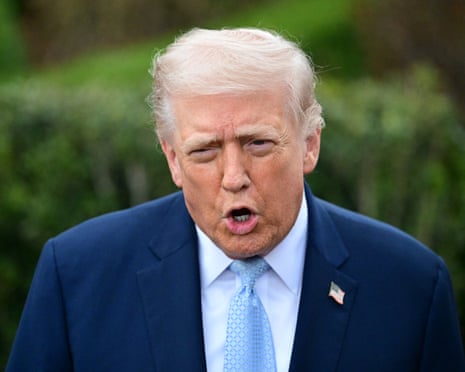
President Donald Trump was inaugurated for his second term as the 47th president of the United States on January 20, 2025. He serves with Vice President J.D. Vance, a former senator from Ohio. Ballotpedia
The second term has been, by any measure, extraordinarily active.
Executive Orders and Government Reshaping
As of March 16, 2026, President Trump had signed 250 executive orders, 58 memoranda, and 133 proclamations in his second presidential term. Ballotpedia That pace of executive action is staggering. It reflects a clear strategy: move fast, set policy through executive authority, and reshape the federal government before legal challenges can slow things down.
Trump began his second presidency by initiating mass layoffs of federal workers and imposed tariffs on nearly all countries at the highest level since the Great Depression. Wikipedia The tariff policy in particular triggered major economic and legal battles. On August 29, 2025, the U.S. Court of Appeals for the Federal Circuit ruled 7-4 that many of Trump’s tariffs were invalid, finding that the International Emergency Economic Powers Act did not grant the broad powers the Trump administration claimed. Wikipedia
Foreign Policy: From the Middle East to Iran
On the international stage, Trump’s second term has been anything but quiet.
His administration increased support for Israel in the Gaza war, struck Houthi targets in Yemen, and aided Israel in the June 2025 Twelve-Day War. In early October 2025, Trump’s plan for a Gaza ceasefire deal between Israel and Hamas was signed. Wikipedia
In February 2026, Trump launched a major attack on Iran with Israel, with the stated goal of regime change. Wikipedia That decision was one of the most dramatic foreign policy moves of any recent U.S. president and drew sharp reactions from governments and analysts around the world.
Economic Claims and Housing Policy
The White House has been eager to trumpet economic results. The administration claimed real GDP rose 4.3% in the third quarter of 2025, smashing economists’ expectations, while inflation ran at just 2.4% since Trump took office — down significantly from its peak during the Biden era. The White House
In January 2026, Trump proposed several actions to make housing more affordable, including banning large institutional investors from buying single-family homes, buying up to $200 billion of mortgage debt to reduce mortgage interest rates, and making 50-year mortgages available. Wikipedia Housing affordability remains one of the most pressing economic concerns for everyday Americans, so these proposals attracted significant attention.
Why Donald Trump Remains So Polarizing
Here’s the honest truth: your opinion of Donald Trump probably depends heavily on what you value most in a leader and a country.
If you prioritize economic nationalism, strong borders, a non-interventionist approach to culture wars, and a disruption of political norms that you believe were failing working-class Americans, then much of what Trump has done likely looks like bold, necessary leadership.
If you prioritize democratic norms, multilateral alliances, civil rights protections, freedom of the press, and the rule of law applied equally to the powerful and the powerless, then much of what Trump has done likely looks deeply troubling.
His uncanny resilience to scandals has led him to become one of two U.S. presidents to serve two nonconsecutive terms, even after two impeachments, leading a rally that resulted in a mob storming Congress, and being the only former U.S. president convicted in a criminal case. Encyclopedia Britannica
That resilience is itself a remarkable political fact, whatever your view of the man.
The Legacy Question: How Will History Judge Donald Trump?
It’s genuinely too early to give a definitive answer. His second term is still unfolding. Courts are still ruling on his executive actions. Geopolitical situations he has influenced — in Iran, Ukraine, the Middle East — are still developing.
After his first term, scholars and historians ranked him as one of the worst presidents in American history. Wikipedia But presidential reputations shift over time, sometimes dramatically. His supporters argue that the results of his policies will vindicate him. His critics argue that the damage to democratic institutions is something historians will mark for generations.
What seems certain is that Donald Trump has permanently reshaped American politics. Since 2015, Trump’s leadership style and political agenda — often referred to as Trumpism — have reshaped the Republican Party’s identity. Wikipedia The questions, values, and fault lines he brought to the center of American life are not going away anytime soon.
Conclusion
Donald Trump is one of those rare figures who genuinely forces you to form an opinion. His life story — from wealthy Queens kid to real estate brand builder to reality TV host to two-term president — is extraordinary by any standard. His record is a mix of undeniable energy and deeply contested outcomes.
What I find most interesting about Trump, personally, is that both his supporters and his critics tend to underestimate something about him: his instinct for what makes people pay attention. Love him or hate him, he has held the world’s attention for over a decade. And that, in politics, is a power of its own.
Whether you’re still forming your view or you’ve had a firm one for years, the best thing you can do is keep asking questions, read widely from multiple sources, and resist the temptation to reduce someone this complicated to a simple hero or villain.
What do you think? Does Trump’s record as president change how you see him compared to his years as a businessman? Drop your thoughts — it’s a conversation worth having.
Frequently Asked Questions About Donald Trump
1. When was Donald Trump born? Donald Trump was born on June 14, 1946, in Queens, New York. Wikipedia
2. What was Trump’s career before politics? Trump was a real estate developer, brand licensor, and television personality. He made his name in Manhattan real estate with projects like the Grand Hyatt New York hotel and Trump Tower, and later hosted The Apprentice from 2004 to 2015. HISTORY
3. How many times has Trump been president? Trump has served two terms. He was inaugurated as the 47th president on January 20, 2025, having previously served as the 45th president from 2017 to 2021. Ballotpedia
4. How many times was Trump impeached? Trump was impeached twice by the House of Representatives — the only president in U.S. history to be impeached twice — though he was acquitted by the Senate both times. EBSCO
5. Was Trump ever convicted of a crime? Yes. Trump was convicted of falsifying business records in May 2024, making him the first former U.S. president to be convicted of a crime. Biography
6. What is Trump’s signature policy agenda called? Trump’s leadership style and political agenda are often referred to as “Trumpism,” which has significantly reshaped the Republican Party’s identity since 2015. Wikipedia
7. How many executive orders has Trump signed in his second term? As of March 16, 2026, Trump had signed 250 executive orders, 58 memoranda, and 133 proclamations in his second term. Ballotpedia
8. What were Trump’s major foreign policy moves in his second term? Trump’s second term included increased support for Israel in the Gaza war, strikes on Houthi targets in Yemen, a Gaza ceasefire deal signed in October 2025, and joint U.S.–Israeli strikes on Iran in February 2026. Wikipedia
9. What is the “Make America Great Again” movement? MAGA is the fiercely tribal political movement Trump started, which came to dominate American politics in the second half of the 2010s and 2020s, centered on economic nationalism, immigration restriction, and a rejection of establishment politics. Encyclopedia Britannica
10. How has Trump’s tariff policy fared legally? On August 29, 2025, a federal appeals court ruled 7-4 that many of Trump’s tariffs were invalid, finding that the law he relied on did not grant the broad powers his administration claimed. Further tariffs were subsequently struck down by the Supreme Court in February 2026
