Gavin Newsom 2028: Bold Frontrunner or Risky Bet?
Introduction
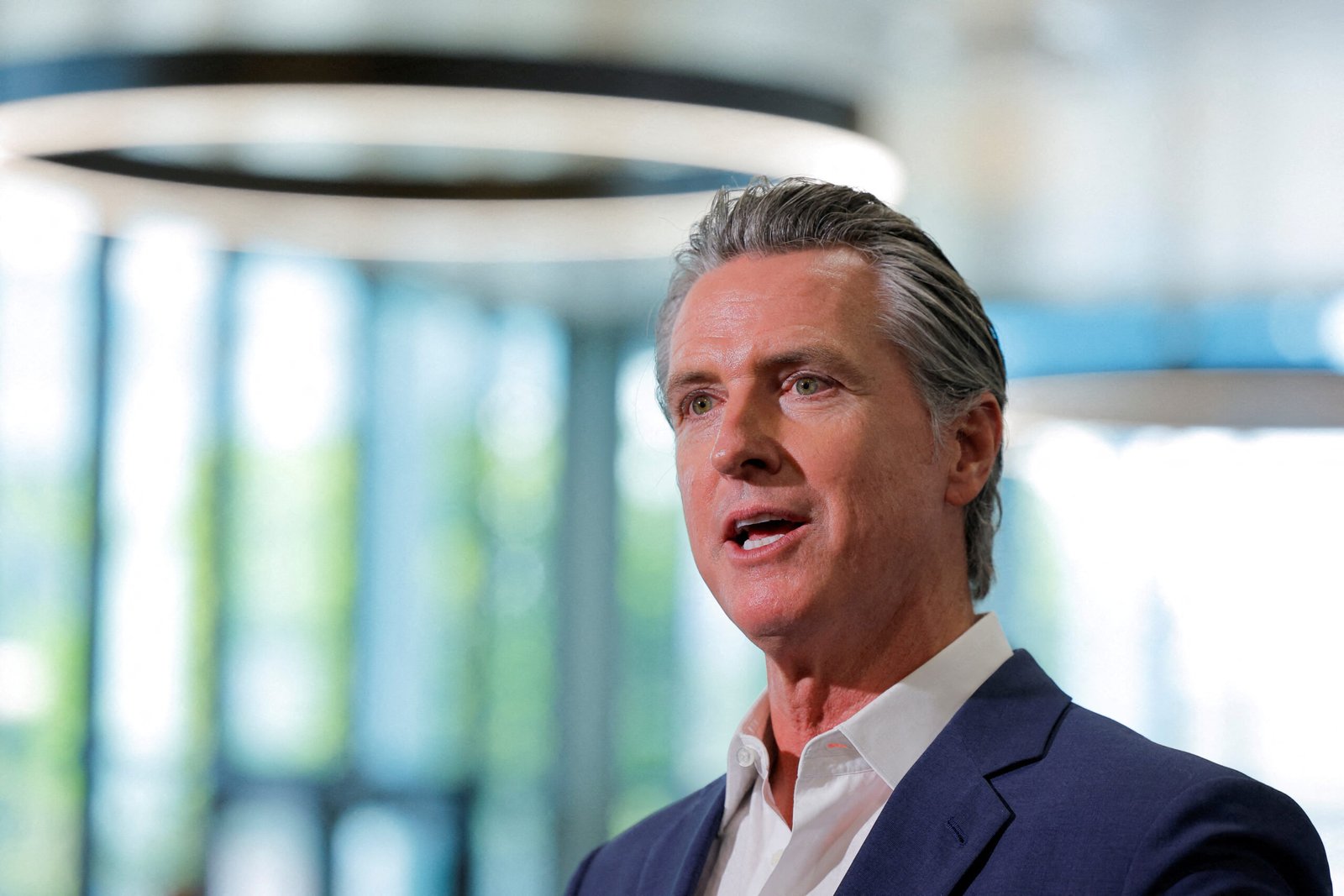
If you have been following American politics even casually, you have probably noticed one name popping up again and again in the 2028 conversation: Gavin Newsom. The California governor has been everywhere. He is on podcasts. He is in New Hampshire. He is trolling the president on social media. He is writing memoirs. And every single move he makes feels less like the action of a term-limited governor winding down and more like the warm-up act for something much bigger.
The question of the Gavin Newsom 2028 presidential race is not just a political nerd’s obsession anymore. It is the conversation that Democratic donors, strategists, and voters are having right now. And it is a complicated one. Because Newsom is simultaneously one of the most energizing figures in his party and one of the most polarizing. He has real strengths, real weaknesses, and a record that his opponents are already sharpening their knives over.
So let’s walk through all of it. Who is Newsom, where does he stand, what are the polls saying, and what could actually stop him from getting to the White House?
Who Is Gavin Newsom and Why Does He Matter Right Now?
Gavin Newsom has served as California’s governor since 2019. Before that, he was the state’s lieutenant governor for eight years, and before that, he was the mayor of San Francisco, where he made national headlines in 2004 by directing city officials to issue marriage licenses to same-sex couples, a bold move at the time that defined his reputation as a risk-taker.
He is term-limited and will leave the governor’s office in January 2027. That timing matters a lot. It essentially means 2028 is his moment, if he wants it. And increasingly, it looks like he does.
He launched a political action committee called Campaign for Democracy back in 2023. He started a podcast in 2025 where he invited not just liberals but figures like Steve Bannon and Charlie Kirk, a deliberate move to show he can sit across the table from conservatives. He released a memoir titled “Young Man in a Hurry” in early 2026 and toured it through states that happen to hold early presidential primaries. He stopped in New Hampshire in March 2026. That is not a coincidence.
The Polls: Where Does Newsom Actually Stand?
Here is the honest picture. In early 2026, Newsom is leading early polls of the Democratic primary field, but the lead is modest and the race is wide open.
An Emerson College poll from February 2026 showed Newsom ahead with 20% support among likely Democratic primary voters. Former Transportation Secretary Pete Buttigieg came in at 16%, and former Vice President Kamala Harris sat at 13%. Representative Alexandria Ocasio-Cortez was at 9%. Nearly one in four Democratic voters said they were still undecided.
A Washington Post opinion piece from February 2026 called Newsom the early Democratic frontrunner, pointing to his “joyful combat” approach and natural charisma. Democratic strategist Joel Payne put it plainly: Newsom became “the default answer of who Democrats are thinking about for 2028” because he stepped up when the party was searching for leadership.
But early frontrunner status cuts both ways. History is full of early frontrunners who peaked too soon. And not all polling tells the same story. A CNN poll from late 2025 also showed Newsom leading other potential Democratic candidates, but that same poll found that two-thirds of respondents said they did not have a specific candidate in mind at all.
On the Republican side, Vice President JD Vance is currently the early frontrunner for 2028, should he choose to run.
What the Polling Reveals About His Weak Spots
Here is where it gets harder for Newsom. While he leads among older Democrats and in name recognition, his numbers among key voter groups are concerning:
- Non-college voters disapprove of him by roughly 21 points, 48% to 27%.
- Among swing voters, he is underwater by 12 points.
- Black voters who regularly attend religious services show meaningful unfavorable views, which could matter enormously in early primary states like South Carolina.
- A separate Emerson poll found that 59% of California voters themselves do not think Newsom should run for president in 2028, with only 41% in support.
That last data point is the kind of thing that keeps campaign strategists up at night.
What Is Newsom’s Strategy Going Into 2028?
Newsom’s approach so far has been consistent. He is positioning himself as the Democrat who is actually willing to fight.
He has gone toe to toe with Donald Trump on social media, adopted some of Trump’s own brash communication tactics to mock and counter the president, and built what his team describes as an extensive list of small-dollar donors. More than 100,000 contributors who had not previously donated to his campaigns have come in recently, and more than half of them live outside California.
That geographic spread of donors outside his home state is one of the clearest signs that he has genuine national appeal, not just California appeal.
He has also been deliberately broadening his positioning. He pushed back against the “California liberal” caricature by moving toward the center on several issues. He spoke out against the presence of transgender athletes in women’s sports, calling it “deeply unfair.” He pushed to clear homeless encampments. He proposed limits on healthcare benefits for undocumented immigrants, a departure from his earlier positions. He worked to preserve the Diablo Canyon nuclear plant rather than shut it down.
Some see these moves as smart political triangulation. Others see them as a sign that Newsom is already playing it safe, afraid of the general election map even before he is through the primary.
In a revealing moment, Newsom told The Guardian in February 2026: “If someone else doesn’t have that fire, that sense of purpose and mission, then, yeah, I could see myself stepping into that void.” That is about as close to a campaign declaration as you can get without actually filing paperwork.

The Real Liabilities: Why Newsom Could Struggle
Let’s be honest about the challenges here, because they are real.
The California Problem
California is the most populous state in the country and a powerhouse of American culture and innovation. It is also, to a significant portion of the national electorate, a symbol of everything they distrust about the Democratic Party. High costs of living. Homelessness visible in major cities. A high-speed rail project years behind schedule with costs that have ballooned dramatically. A recall effort Newsom survived in 2021 but that left scars.
As one analyst put it, the state’s problems with affordability, housing, and quality of life are going to follow Newsom everywhere he campaigns. Rivals are already plotting how to use his record against him, with one Democratic operative telling Axios that the “French Laundry” incident, where Newsom was photographed dining maskless at an expensive restaurant during his own COVID lockdown restrictions, is “never going away.”
The Progressive vs. Centrist Squeeze
Newsom is caught in a genuine bind. If he moves too far to the center to win a general election, he risks alienating the progressive base that drives Democratic primary turnout. If he stays too progressive, he hands Republicans ammunition in a general.
As one Democratic strategist explained, Newsom is “in a vice” because he carries the perception of being a “too-far leftie from California” without getting full-throated progressive support in return. His recent centrist pivots on issues like housing deregulation and transgender sports have frustrated parts of his base without necessarily winning over moderates.
The Kamala Harris Factor
Harris is also reportedly considering a 2028 run. She has a deep base among Black voters, a ready-made national operation, and strong name recognition. When Newsom was asked directly about a potential primary matchup with her, he offered only vague answers, saying “fate will determine that.” That is not exactly the confident response of someone who has fully thought through that collision.
His Family
In a genuinely human moment, Newsom shared that his son Romeo texted him when a headline suggested he had decided to run: “Dad, are you running for president?” When Newsom replied that the decision would be a family one, his son responded: “You can’t. I’m too young. You need to spend more time with us.”
Newsom asked publicly: “How do you deal with that one?” It is a question that has no clean political answer.
What Newsom Has Going for Him
Despite the challenges, Newsom’s strengths are considerable and should not be underestimated.
He knows how to fight. In an era where Democratic voters are desperately hungry for someone who will stand up to Trump rather than hedge, Newsom has shown a willingness to punch back. He challenged federal “border czar” Tom Homan to arrest him. He went to Brazil as an unofficial U.S. delegate to climate talks that Trump boycotted. He pushed Proposition 50 in California. He wins the “fighter” perception test better than almost anyone in his party right now.
He has charisma. Politics is partly a performance, and Newsom performs well. He is comfortable in front of cameras, articulate under pressure, and capable of connecting emotionally with audiences. That is not nothing.
He has money. Donors are not just encouraging him to run. They are begging him. Hollywood, Silicon Valley, developers across the state and beyond are lining up. The small-dollar donor base he has built adds grassroots credibility to the big-dollar foundation.
He has time to sharpen his message. Newsom leaves the governor’s office in January 2027. He then has over a year before the primary season heats up. If he enters the race, he enters with a national profile, a fundraising machine, and time to address the vulnerabilities in his record.
The Other Democrats Watching Closely
Newsom is not running in a vacuum. The 2028 Democratic primary is shaping up to include a genuinely competitive field.
Pete Buttigieg sits at 16% in early polling and leads among women and postgraduate voters. Alexandria Ocasio-Cortez leads among voters under 30, though she appears reluctant to enter a presidential race and has been mentioned as a possible Senate primary challenger instead. Pennsylvania Governor Josh Shapiro is watching. Kentucky Governor Andy Beshear is watching. Illinois Governor JB Pritzker, worth billions and willing to fund his own campaign, is also in the conversation.
The Democratic Party has no clear heir, no obvious successor, and no consensus on direction. That environment is simultaneously Newsom’s greatest opportunity and his greatest risk.
Should Democrats Be Excited or Worried About a Newsom Run?
Honestly, the answer is both.
Democrats who want a fighter who speaks fluent media, raises money effortlessly, and can go viral for the right reasons have good reason to be energized by Newsom. He is skilled, experienced, and has demonstrated real courage in taking on an unpopular president in real time.
But Democrats who remember how 2024 went, and who worry about another nominee who gets defined by coastal elite stereotypes before they even get to a general election, have legitimate concerns. Newsom’s pivot toward centrism is still a work in progress. His California record is a genuine target-rich environment for Republicans. And his ability to win over non-college voters and swing-state moderates remains deeply unproven.
The next 18 months will tell a lot. If Newsom can use his post-governor period to tell a more complete story about himself, address his record head-on, and build genuine connections outside blue California, he could be a formidable nominee. If he gets defined before he gets to define himself, history suggests that is a very hard hole to climb out of.
Conclusion
The Gavin Newsom 2028 story is one of the most compelling and contested political narratives in America right now. He is a genuine frontrunner with real weaknesses. He is a fighter with a complicated record. He is a politician who clearly wants to run but has not yet fully committed to the leap.
What makes this so interesting is that there is no predetermined answer here. Newsom’s 2028 prospects depend as much on what happens in the 2026 midterms, what Trump does next, and how the Democratic Party’s internal debate over direction gets resolved as it does on anything Newsom himself does.
One thing is clear though. He is not going anywhere. And if you care about who is going to shape the next chapter of American politics, you are going to want to keep watching him very closely.
What do you think? Is Gavin Newsom the fighter Democrats have been waiting for, or is his California baggage too heavy to carry into a general election? Share your take.
Frequently Asked Questions
Is Gavin Newsom officially running for president in 2028? No, as of early 2026, Newsom has not officially declared his candidacy. However, he has acknowledged thinking about it and has taken numerous steps, including a book tour, podcast, and visits to early primary states, that strongly signal presidential ambition.
Where does Gavin Newsom stand in 2028 polls? An Emerson College poll from February 2026 showed Newsom leading the Democratic primary field with 20% support, ahead of Pete Buttigieg at 16% and Kamala Harris at 13%. However, nearly one in four Democrats remained undecided.
What are Gavin Newsom’s biggest weaknesses heading into 2028? His biggest challenges include his California record on homelessness and affordability, his association with the “San Francisco liberal” image, difficulty connecting with non-college voters, and the lingering memory of his maskless French Laundry dining during COVID restrictions.
Who are Newsom’s likely Democratic rivals in 2028? The field includes Kamala Harris, Pete Buttigieg, Alexandria Ocasio-Cortez, Josh Shapiro, JB Pritzker, Andy Beshear, and others. The field is wide open with no single dominant challenger yet.
When does Gavin Newsom leave office as California governor? Newsom is term-limited and will leave office in January 2027, freeing him to focus on a presidential campaign.
How much fundraising support does Newsom have for 2028? Newsom has reportedly gained over 100,000 new small-dollar contributors who had not previously donated to him, with more than half coming from outside California. Major donors from Hollywood, Silicon Valley, and beyond are actively encouraging him to run.
What is Newsom’s book “Young Man in a Hurry” about? Released in February 2026, Newsom’s memoir covers his upbringing in San Francisco by a single mother, his early business career, and his entry into politics. He uses it to push back against the perception that he was born into great wealth and privilege.
How has Gavin Newsom positioned himself on key issues ahead of 2028? Newsom has made deliberate centrist moves, including speaking against transgender athletes in women’s sports, supporting homeless encampment clearings, proposing limits on healthcare for undocumented immigrants, and backing nuclear energy. Critics say he is trying to appeal to moderates while risking his progressive base.
What does JD Vance’s position mean for Newsom in 2028? Vance is the early frontrunner on the Republican side for 2028. A Newsom versus Vance general election would be a sharp ideological contrast, which could energize both bases but may present challenges for Newsom in swing states.
Could Kamala Harris run against Newsom in the 2028 primary? Yes. Harris has been mentioned as a potential 2028 candidate, and both are fellow Californians with national profiles. When asked about a possible clash, Newsom gave vague answers, suggesting the question remains unresolved.